1939
- Academic and Admiralty
examinations for entrance into Royal
Navy.
1940
- Joined Royal Naval College,
Dartmouth for training. Represented
the College at boxing.
ROYAL
NAVAL COLLEGE DARTMOUTH 1940-43
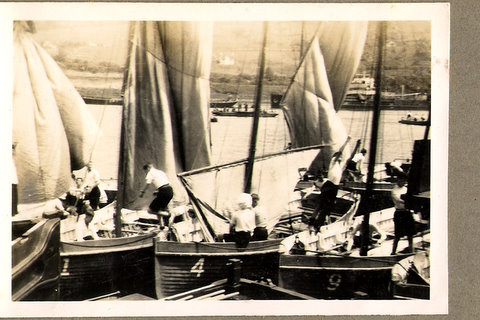
My
love of
boats -
Some
cadets owned DODs (below
right) and when they left,
another new boy, or at least his
parents, would buy it so they were
always in use.
|
| |
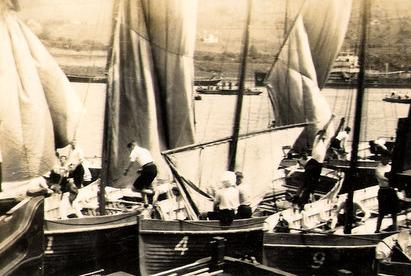
32-foot naval cutters |
|
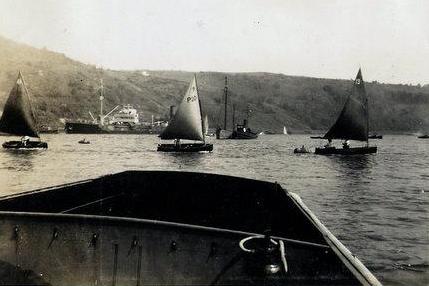
My Dartmouth One Design Trivia
9P20.
|
|
|
| |
|
FIRST
SHIPS
|
| |
| |
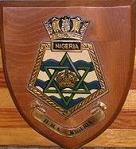
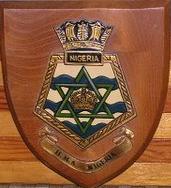
HMS Nigeria, light cruiser |
|
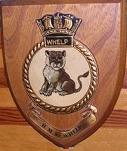
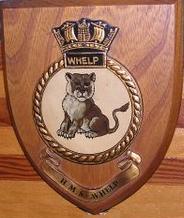
HMS Whelp, destroyer
|
|
|
| |
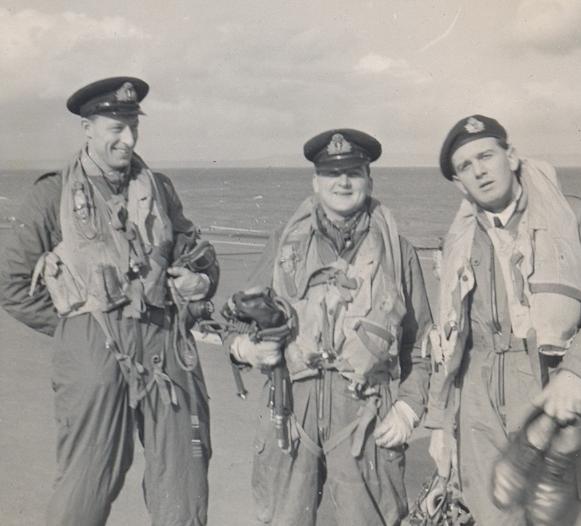
1943 - At the
age of 17 graduated and joined first ship,
cruiser HMS Nigeria and later destroyer
HMS Whelp (see account of two
operations below). Took part in
operations in the Channel, off Norway, and
then went through the Mediterranean to the
Indian Ocean. For some operations off the
Malay Peninsular we were joined by the
carrier USS Saratoga.
HMS
WHELP December 1944 - January 1945
On
the 17th Dec 1944, we sailed on an
operation against the Japs and it may be
of interest to give some detail.
OPERATION ROLSTON
We
sailed in company with Wager and the
fleet oiler RFA Waveking. After
receiving oil by the double trough
method we joined up with the main body,
Force 66, consisting of the carriers
Indomitable and Victorious, and the
cruisers Newcastle, Argonaut and Black
Prince [ RNZN]. The anti-submarine
screen, starting from the port wing, was
Whirlwind, Wrangler, Wakeful, centre
front Kempenfelt [O/ic screen] and
starboard wing, Wessex, Whelp and Wager.
All belonging to the 27th destroyer
flotilla [DF]. Screening Diagram No 6
was ordered. The force steamed between
Car Nicobar and Sabang and down the
Malacca Straits. The carriers flew off
strikes on airfields and oil depots. We
picked up a downed aviator. On the way
back another strike was carried out on
Sabang and we were back in Trinco on the
22nd. We then went alongside the depot
ship Tyne for a boiler clean.
We
were looking forward to a quiet Xmas but
were sailed on Xmas day to give aid to
one of our submarines, HMS Shakespeare.
She had attacked and sunk a Jap tanker
but received 4 shell hits in the process
which prevented her submerging, after
which she was attacked by bombers
several times but managed to avoid
further damage. When carrying out
temporary repairs she had pumped out
some of the excess water in her
compartments, which caused her prop
shafts to seize—they had been lubricated
by the oil floating on top of the
water!! We arrived and passed a tow to
her and while doing this our CO put our
stern a bit too close to the subs bows
and collected a nice 2 foot slice in our
starboard quarter. He was never much
good at ship handling. Back in harbour
we had a late Xmas celebration while the
damage was welded up.
OPERATION LENTIL
On
31 Dec Wessex and Wakeful escorted the
RFA Waveking and RFA Empire Salvage to
the rendezvous. Task Force 65 set off on
the 1st Jan 1945 and consisted of the
carriers Indomitable [Adml P.Vian, of
Altmark fame], Indefatigable and
Victorious, cruisers Suffolk, Argonaut
and Black Prince escorted by the 27th
and 25th DFs. Screen from port
wing—Ursa, Urania, Undaunted, Grenville
[o/ic], starboard wing Undine, Wager,
Whelp, Kempenfelt. Screening Diagram no
7 and Cruising Disposition No 61 were
ordered. Strikes were flown off from
between the Similan Islands and Sumatra
to put the airfield in the Medang area
out of action and bomb/rocket the oil
refinery.
|
Carrier
|
First
Strike
|
Second
Strike
|
|
Indomitable
|
16
Avengers
16
Hellcats
|
20
Avengers
28
Hellcats
|
|
Victorious
|
16
Avengers
11
Corsairs
|
18
Avengers
30
Corsairs
|
|
Indefatigable
|
12
Fireflys
|
12
Fireflys
24
Seafires
8
pr Hellcats
|
The
raids were a success and
although several a/c were
damaged and ditched on the way
back, all crews were saved [we
picked up one] also, one
aircraft went in on takeoff
and that crew was saved. There
were two rescue submarines in
the area—Statesman and
Thorough. One odd Jap aircraft
flew over the fleet and the
carriers opened up with their
4.5 inch guns. Most of the
shell fragments fell back
amongst the fleet.
I
came back to England by troopship
in June 1945 and at the end of the
war was on Sub Lieutenant's
courses, mainly in the Portsmouth
area. One might call them post
graduate courses, the finer points
of navigation, communications,
gunnery, torpedo work, submarines
and aviation.
On
completion we had to specify which
specialisation we wished to take
up, I chose aviation, having
wanted to fly since I was about
ten. We celebrated VE day at the
Town Hall Square, Portsmouth,
packed with people and a huge
bonfire.
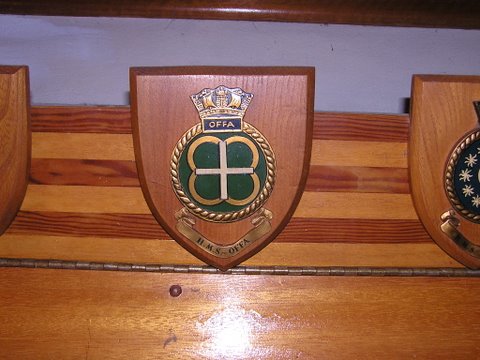
HMS
OFFA 1945-46
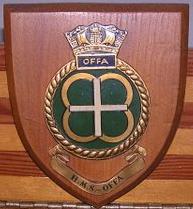
HMS Offa, destroyer
I
joined her in the Firth of Forth
Sept 1945 and after a boiler clean
we proceeded to Londonderry; the
approach up Loch Foyle is quite
tricky, with a couple of S-bends.
We then took part in Operation
Deadlight, taking surrendered
U-boats out to sea and sinking
them - easier said than done.
There were no German personnel
present. The weather throughout
the operation was lousy [as might
be expected in winter off the
nor-west of Ireland]. The original
idea was to have some personnel in
the submarine who would lay
scuttling charges, light the blue
touchpaper and be taken off by our
motor cutter. The weather fixed
that. So we towed each sub, with
the conning tower hatch open, out
to the desired area. As the towing
speed was 2 knots we had little or
no steerage way for most of each
trip and a very uncomfortable
ride. When the first boat was cast
off we lay off its beam and opened
fire with our 4.7 inch guns, each
mounting firing in turn to give
some competition to the gun crews.
It was hit very early and sank.
The gunnery officer was beside
himself with glee! The second sub
took 5 salvoes to hit and the
third sub was never hit and sank
itself - the gunnery officer hid
below decks.
I
cannot remember how many we towed
out but the excitement wore off
fairly soon. I have read that 221
U-boats were scuttled or destroyed
by their crews and 156
surrendered. HMS Zambesi was
another destroyer occupied in this
task and her Sub Lieutenant was
Dick Stock, subsequently on my
flying course and then in 802
squadron with me.
We
had Christmas alongside in
Londonderry, and another officer
and myself were detailed off to
look after the ship while everyone
else shot off to their families.
We had quite a good time and an
hilarious episode with a WRNS
carol singing group. When the fun
at Londonderry was over we
steamed, south about, to the Firth
of Forth to pick up some German
destroyers. After the war the
Allies had decided that the French
did not qualify for reparations.
However, the French kicked up such
a fuss that the arrangement was
rescinded and our part was to
escort five destroyers to
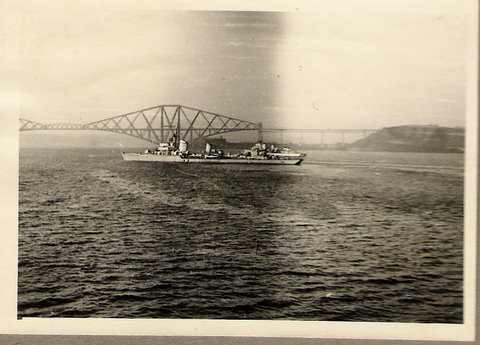
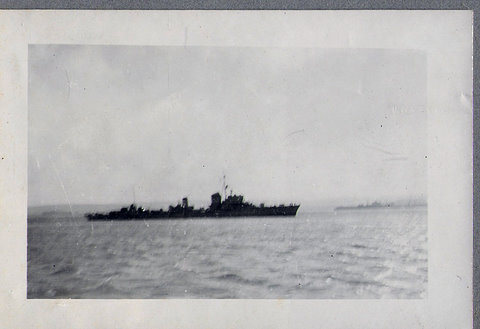
Cherbourg. These consisted of two
"Narvik" class, two "Maass" class
and one T-boat which were anchored
east of the Forth Bridge. We
anchored near the most easterly
one and I was sent, in our motor
cutter, to brief the captains of
the routine they were to follow. I
reached the first ship's gangway,
port side aft and, when arriving
on deck, found one German sailor
who guided me to the wardroom
where, it so happened, all the
officers were assembled, sitting
around three tables.
|
| |
|
|
|
|
| |
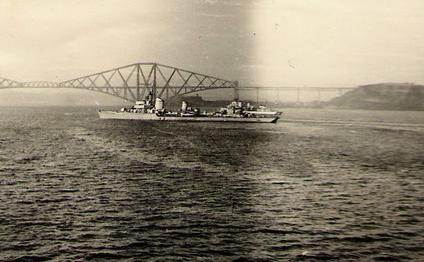
German destroyers in the Firth
of Forth - Z.5, Z.6
|
|
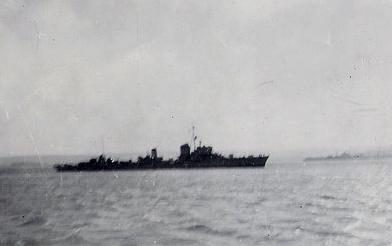
Germans in the Forth - Z.25 and
Z.31
|
|
| |
|
|
|
|
|
| |
As
soon as I entered every officer leapt to
his feet and stood to attention. As I
was only a Sub-Lieutenant this was
somewhat startling, and I tried hard to
appear nonchalant and suggested that
they be seated. The Captain remained
standing and called me "sir" throughout
the proceedings. I ran through the
orders, such as each ship's disposition,
speed, signalling etc. The Captain was
somewhat nonplussed when told we would
proceed at 12 knots, I don't think they
went anywhere at less than 25. However,
we were back to the old peacetime
routine of economical cruising. I asked
him what a framed quotation hung on the
bulkhead was about (Nicht argern -
nur wundern) and he said that it
read "Not asking, just wondering" and he
gave it to me. I understood that it
referred to the Hitler regime and that
the Kriegsmarine were not very pro-Nazi.
It was getting dark and the Firth of
Forth is a large and lonely place to be
in a small boat with no navigation aids,
so I told him to pass on the
instructions to the other Captains and
knew that the order would be carried out
efficiently. The wardroom was very
spartan with no homely fittings, soft
seating or woodwork and painted grey
throughout.
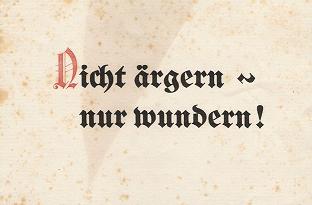
"Not asking,
just wondering"
Next
morning we sailed to Cherbourg and led
them into harbour, but I cannot remember
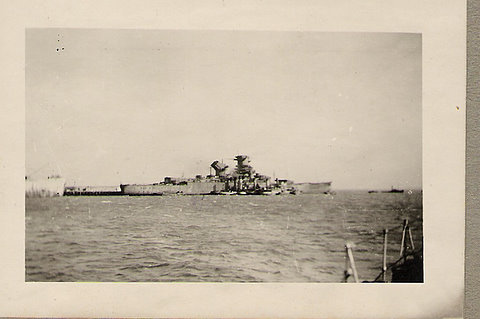
what sort of reception we got. The
battleship Jean Bart, sister ship to the
Richelieu, was alongside a wharf and
still had not been completed. Richelieu
had been manned by Free French matelots
during the latter part of the war and
took part in operations with the RN.
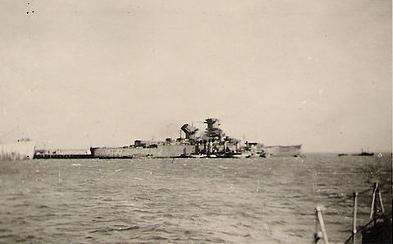
FNS Jean Bart, Cherbourg, early Feb 1946
This
episode aroused my interest in German
destroyers and their war achievements and
so I will pen some facts and opinions. At
the battle in the Norwegian fiords, called
Narvik afterwards, the Germans lost ten
destroyers. Four could have probably
escaped but for the timidity of their
commander by the name of Bey [who was to
make another error later in the war] For
some reason [like Dunkirk and Gallipoli]
the action was treated in Germany as
heroic and the replacement ships were
called the Zerstorer-Flotille "Narvik"
They were much bigger than our ships -
2600 tons against 1900, 38 knots/31, 5.9
inch guns/4.7.
The
two we took to the French were Z.25
and Z.31. The other destroyers were of
the Leberecht Maass Class, 2200 tons,
5 inch guns, 30 knots. These ships
were named after German naval officers
who lost their lives in the first
World War. The two we escorted were
Z.5 - Paul Jacobi and Z.6 - Theodor
Riedel. The Torpedoboote was a ship
more on a par with some of our fleet
destroyers and Hunt-class escorts,
1200 tons, 4.1 inch guns, 35 knots and
6 or 8 torpedo tubes. We took one down
to Cherbourg and the records show that
a total of three were handed over to
the French - T.11, T.20 and T.23. All
the ships were crewed by the
Kreigsmarine and some had an RN guard
of about half a dozen sailors on board
- what they were supposed to do was a
mystery. They were certainly
unnecessary as, once they had
surrendered, the vast majority of
Germans did what they were told in a
typically German fashion.
Interestingly,
most of the destroyers were equipped
to carry mines, 76 in some cases. They
carried out major minelaying
operations off the coast of the UK up
to the end of 1940 which sank around
90 ships. British authorities did not
find out until after the war and
thought the casualties were being
caused by submarine mining. Up to four
destroyers were used in each operation
and all laying was done at night which
of course is very tricky [the first
operation was OK because some of the
UK navigation buoys were still lit!!]
Engines
- The boiler pressure was very high.
Even higher than USN ships. Higher
pressure steam means higher speed
but has its drawbacks. Firstly, the
steam pipes and turbine blades have
to be strong enough and, secondly
heavy fuel consumption. These ships
were plagued with engineering
problems, called by ships staff
"rickets", and were often sent back
to base by the big ships due to
emptying fuel tanks or engine
problems, leaving the "heavies"
without protection.
Hull
design -
Germany is not a maritime power and
that is borne out by a study of the
warships hull design which had low
flat fo'c'sles and no flare in the
bows. This meant they were very
"wet" in anything but a flat calm
and pretty useless in northern and
western seas. Some ships like the
battleship Scharnhorst had to be
modified with what was called an
Atlantic bow, putting a flare on the
hull forward and raising the deck.
Destroyers were very prone to
rolling and broaching to in a
following sea. To assist in
stability they were told not to
empty their bunkers below 30%, which
of course limited their range even
further. For detailed information
see "German Destroyers in WW2”by M J
Whitley, published by Arms and
Armour Press. An excellent read.
After
we had escorted the ships to Cherbourg
we met with a vessel from Argentina
carrying the remnants of the crew of
the pocket battleship Graf Spee,
scuttled off Montevideo, after an
action with three RN cruisers, in
December 1939. They must have had a
pleasant war!!!! We escorted the ship
to Hamburg and then proceeded to
Brunsbuttel, and the entrance to the
Kiel Canal.
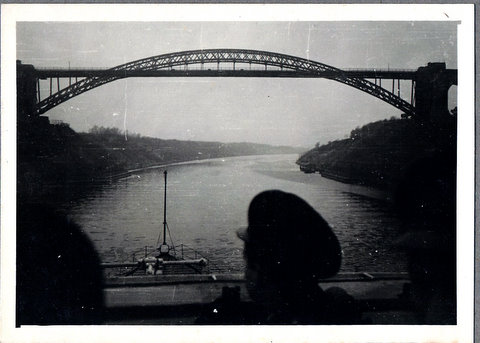
|
| |
| |
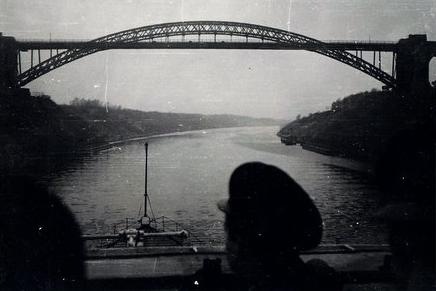
Kiel Canal February 1946
|
|
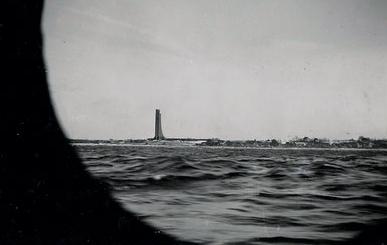
German Naval Memorial World War
1, Laboe,
entrance to Kiel Fiord, east
side
|
|
|
| |
The
reason I was in Offa was to gain my
Watchkeeping Certificate, which means one
is competent to be in control of a ship
whilst at sea. The fact that I did not
have one at the time did not really matter
as I was "watch on, watch off” with
another officer from the start. The only
qualified officers were the Captain and
the Navigator, neither of whom kept
watches, and one other Lieutenant. A watch
is four hours at a time except the dog
watches of two hours each. I thoroughly
enjoyed sea watchkeeping, especially the
Morning Watch from 0400 to 0800. The best
part of the day, watching the dawn break
and the sun rise over the ocean.
We
used to have some entertainment on the
compass platform in the form of floating
mines. These can break adrift in heavy
seas of which there were plenty, mostly
in the North Sea. These mines of the
moored type had horns sticking up around
the upper surface, if one was hit -
Boom!!! We used to see them occasionally
and so you stopped the ship, called the
Captain and then grabbed a .303 service
rifle kept handy and blazed away. Two or
three of us firing, yet never had one
blow up - disappointing! When the casing
had enough holes in it the mine would
sink. At night we just kept our fingers
crossed.
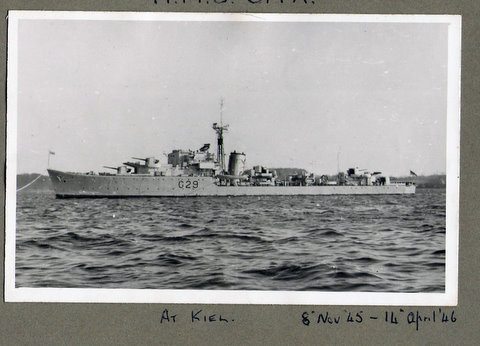
KIEL,
GERMANY - EARLY FEBRUARY TO APRIL 1946
Arriving
at Brunsbuttel, the North Sea end of the
Kiel canal, we picked up a German pilot
and steamed up the canal. He must have
thought his end was near when the
Captain arrived on the compass platform
with a large pistol and started taking
pot shots at whatever he fancied. On
arriving at the Kiel end we were in the
Baltic Sea, where we anchored and
settled down for a splendid few weeks.
An
incident occurred in June 1945 that
clarified the attitude of the Royal Navy
to the defeated Germans. The Flag
Officer Schleswig-Holstein, [or FOSH]
Vice Admiral H.T.Baillie-Grohman took
his barge, flying the White Ensign and a
Vice Admirals flag, to have a look at
the light cruiser "Leipzig" which had
arrived from Norway and was on her way
to Cuxhaven. He went round the cruiser
twice. The only attention paid to his
flag were rude gestures from some
sailors. The Admiral moved on to conduct
some other business and returned to the
cruiser on the way back, with the same
result. Extremely cross over the lack of
respect he sent a Royal Marine officer,
with a small escort, on board to deliver
written orders to the "Leipzig's"
Captain that at 1000 the next morning,
the ships' company was to be fallen in
on the upper deck in No 1 uniforms and
officers in swords and medals. There was
to be a Flag Officers guard on the
quarterdeck. In addition he moved one of
the RN guard destroyers to anchor abeam
of the cruiser with guns and torpedo
tubes trained on her. The Admiral
returned in his barge and circled the
ship several times while its crew stood
to attention and saluted the Ensign each
time he passed. If his orders had not
been obeyed he had intended to send
Royal Marine Commandos on board to
arrest the Captain. There was never any
more trouble from any German service
personnel in the area. after that. I am
indebted to Michael Nash, of Marine
& Cannon Books for giving me the
details. We had naturally heard of the
event but not the full facts.
We
were allocated an R-boat, a smaller
version of the famous torpedo E-boats
which used to tangle with our MTBs on a
regular basis. R-boats were used for
escort work, inshore mine laying and
general duties. Ours was for our use
solely. I went on board and had a look
around, one could have eaten off the
engine room deck, and the boat was truly
"shipshape and Bristol fashion". Very
interesting twin diesel engines - no
clutch or reverse lever. They approached
the jetty or whatever, and when the
right moment came engines were stopped
and then started in reverse to bring the
boat to a halt. This was done by turning
a wheel on the end of the camshafts.
Later I was given a ride and demo and
the crew took great delight in
demonstrating their prowess. The
approach was done at high speed and with
a great churning of water and dipping of
bows as the engines went astern, we came
to a halt a foot off Offa's gangway.
|
| |
| |
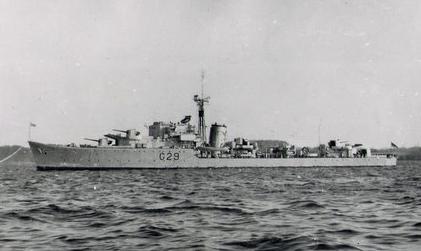
HMS Offa at Kiel |
|
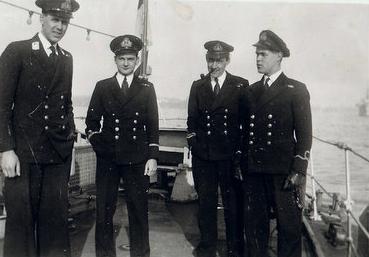
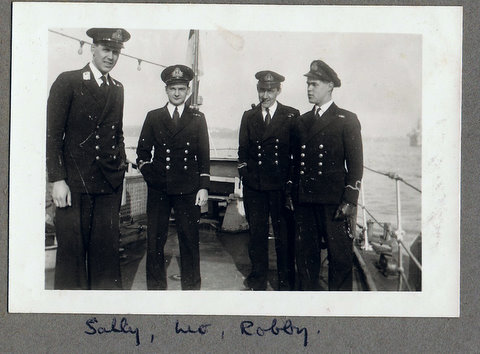
HMS Offa Officers at Kiel 1946
(David Hamilton 2nd from left)
|
|
|
| |
| |
While
in Kiel the ship was painted from stem to
stern by a team of German sailors brought
out every day. Jolly Jack took to leaning
against a stanchion and supervising while
the Germans did the work. Our sailors were
horrified to discover that the Germans
reported every time they finished a job,
so they could get another. Not in the
great British tradition! They were happy
because they got a good midday meal every
day, in contrast to those ashore who were
half starved. The only locals I felt sorry
for were the children and some lucky
children of "our" Germans got most of the
ships "nutty" ration {chocolate] Wherever
one went Germans still in uniform clicked
heels and saluted, including four ring
captains. The adage "Germans are either at
your feet or at your throat" appeared to
apply.
In
conversation with English speaking
Germans, three items were always brought
up. [1] Nobody had been a Nazi. [2] The
war had been started by British and
American big business. [3] Concentration
camps did not exist, it was Western
propaganda. When I was based in Germany in
1950, at RAF Wunstorf, the message was
exactly the same.
The
tradition in the RN of Sunday night
cinema in the wardroom was very popular
because small ships only had one
projector. We regularly entertained
officers from the occupation army and
there would a few duty free drinks and
then dinner with a bit of port passing
followed by the film. At the end of each
reel the lights went up for the reel
change. This was an ideal moment for
recharging glasses, the "pongos" were
most impressed with this procedure. As
the word got around we had to introduce
mid-week shows. This period in my Navy
life was the only time when we had no
wine bills. All the grog had been looted
from the French by the Germans and we
confiscated it from them. We used to
have a couple of glasses of champagne
every breakfast, to start the day. There
were many return favours from the
soldiery, including driving a tank round
the streets, with scant regard for
obstacles, and using German cavalry
horses to gallop round the racecourse.
We
also had two motor cars with drivers,
and a BMW motorcycle with sidecar
[fitted with reverse gear]. A trip to
Hamburg was instructive - acres and
acres of rubble. Our attitude was that
the Germans deserved what they got, we
remembered Coventry, London, Warsaw and
hundreds of other cities in Europe
devastated by their war machine. Hamburg
had 50,000 casualties, more than all the
civilians killed in Britain throughout
the war. Hitler refused to go to the
city and even refused to see a party of
local firefighters. Do not listen to the
"do gooders" who say the bombing of
Dresden was a crime. There were many
factories and a big railway marshalling
yard. 24 troop trains a day were passing
through on the way to the Russian front,
at that late stage of the war.
The
main currency during our stay was
cigarettes. Apart from standard brands
one could purchase from the mess or
canteen, we were issued with Navy Blue
Line cigarettes which cost sixpence for
twenty. Ashore one could get several
pounds sterling in German marks, for a
packet of twenty. They were also used
for barter. It seemed strange that
people who were living a pretty basic
existence should be desperate for a
smoke rather than something to eat.
However, in a lot of cases cigarettes
were exactly that - currency - and
passed from person to person. It reminds
me that, many years later, I paid for
something in Hong Kong with an English
cheque which never came back through my
bank. I found out that some cheques were
circulated as currency [I did not
complain!!!]
The
Royal Kiel Yacht Club had been
commandeered as an officers club and we
used to, of an evening, have a five
course meal, with wine, and excellent
cabaret and figured it had cost us a fag
end each. Many of the occupying forces
dealt in the black market in a big way,
the Americans led the way in this. I was
told that the Americans had driven tanks
over all the stock at the Leica factory
to avoid Kodak being ruined. I ended up
with a nice Rolleicord reflex camera, in
a thick leather case [twenty cigarettes]
and a German naval officers dirk and
sailors heavy leather, high collar,
lined, grey jacket which I used for many
years when wildfowling. It was said that
a few Mercedes cars travelled to England
on the iron decks of destroyers. Two or
three German navy yachts were
confiscated, taken to England, and
handed over to the Royal Naval Sailing
Association, they lasted some years. I
did a bit of single handed sailing in
our 27 foot whaler, but gave it up when
the spray started freezing when it hit
the gunwhales. The photographs of the
Admiral Hipper were taken from the
whaler.
|
| |
| |
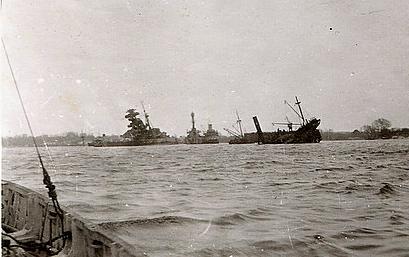
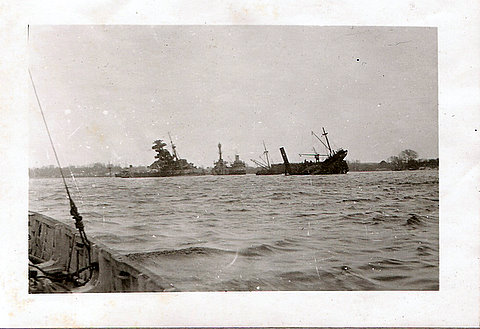
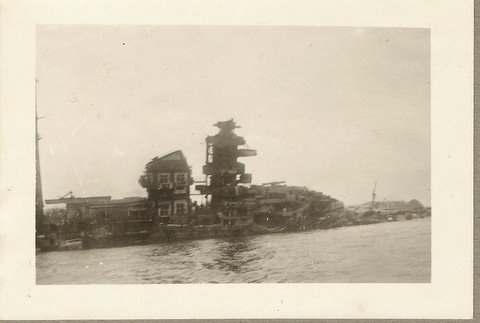
Heavy
cruiser Admiral Hipper at Kiel
February 1946. The
vessel to the right of her,
bow on, is light cruiser
Emden.
|
|
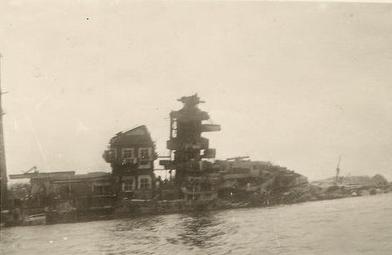
Admiral Hipper, she had been in
dry dock, note factory-type
windows painted on funnel
|
|
|
| |
| |
There
was a Russian destroyer in harbour
looking after their interests and their
senior officer Vice Admiral Raal was
asked to come on board for an
inspection. As I had been through the
naval college I was lumbered for guard
officer duty. We subsequently visited
the Russian for dinner, from memory a
fairly rugged evening. They sailed a
convoy of reparation ships one day,
against the weather expert’s advice and
we were called out to render aid when
most of them were blown ashore. As the
swept channel was only one cable [200
yards] wide we could do nothing.
Incidentally the Kreigsmarine
minesweepers were never disbanded at the
end of the war, they carried on
minesweeping, under the supervision of
the RN.
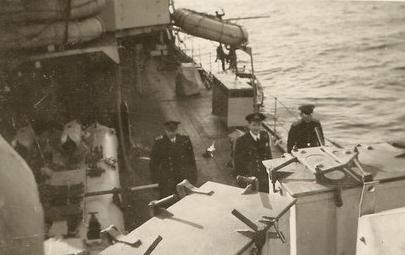
Visiting Admiral Raal of the Soviet Navy
with Lt Cdr M Thorpe CO of Offa
All
good things come to an end and one night
in April 1946 we weighed anchor and
entered the Kiel canal in a snowstorm. The
canal had "street" lights down both sides
and during the time I was on watch they
all went out. Astern both engines, stop
the ship, wake the Captain and turn the
hands out to secure alongside until
daylight.
After
leaving the canal we headed for home
and HMS Offa was put into reserve at
Devonport having served the Country
since October 1941, mainly on Russian
and Atlantic convoys. She was sold to
Pakistan in 1949 and renamed the
"Tariq". She returned to the UK in
1959 and was broken up.
I
had a change in my life style by
learning to fly in the Fleet Air
Arm.
FLEET
AIR ARM and NAVAL AVIATION
1947
- January. Started flying training at
No 6 Elementary Flying Training School
RAF Yatesbury, Wiltshire, in De
Havilland 86A Tiger Moths. Soloed
after 6 hours, 25 minutes dual. Then
Service Flying Training School, RAF
Ouston, Northumberland in North
American Harvards. Awarded Wings 12
November. Then Operational Flying
School (OFS), RNAS Lossiemouth and
RNAS Milltown, Inverness, Scotland in
Supermarine Seafire XV and XVII's.
1948
- After Aerodrome Dummy Deck Landings
[ADDLS] at Milltown carried out first
deck landings on board HMS Implacable
in the English Channel on 22 June.
After leaving OFS became member of the
first pilot cross qualification [F]
course and graduated as Observer
[Navigator]. The Admiralty had decided
that future CO’s should have dual
qualifications.
1949
- Joined first operational squadron
NO.802 flying Hawker Sea Furies in HMS
Vengeance.
1950-53
- In October joined 767 squadron RNAS
Yeovilton and RNAS Henstridge, later
also 768 squadron RNAS Eglinton as
"Clockwork Mouse" training DLCO's
Qualified as Deck Landing Control
Officer ["Batsman"]. Served as such in
HMS Vengeance, HMS Theseus and HMS
Indomitable (see account of fire
and explosion on 3 February 1953
below).
Also
at RNAS's Yeovilton and Henstridge
with 767 Squadron was Jim
Summerlee, where (in Jim's
words)
"he did nothing but take-off and
land on a dummy flight-deck at
Henstridge while 'batsmen' learnt
their trade. Known as 'clockwork
mice', once the course was
completed, they had to do the same
thing for real - on any aircraft
carrier that was available." The
following photographs, from Jim's
story and with his captions, were
taken on HMS Vengeance around 1952.
|
| |
| |
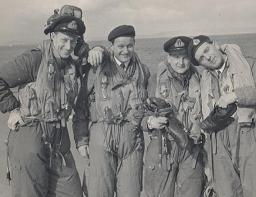
"Jock Lowe, Jim Summerlee,
Shorty Hamilton, Al Hickling"
|
|
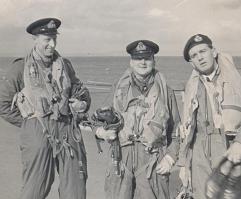
"Jock Lowe (smiles nervously),
Shorty Hamilton (reaching for a
gun),
Al Hickling (flogging his shoes
back)"
|
|
|
| |
| |
1953
- Joined No 3 Front Line Jet Conversion
Course, RNAS Culdrose in July, flying
Supermarine Attackers and Gloster Meteor
Ts. First jet deck landings in Supermarine
Attacker, on HMS Illustrious, 24th July
1953. Then to No.703 Service Trials
Squadron, RNAS Ford. Deck landed Hawker
Sea Fury, Hawker Sea Hawk F1, De Havilland
Sea Vampire 20 and 21, Grumman TBM Avenger
and Fairey Gannet during that time. Also
flew Fairey Firefly 6, Bolton Paul Sea
Balliol, Sea Fury Trainer, North American
Harvard 2b and Vampire 5.
Demonstrated
Deck Landing Mirror Sight, when it arrived
on the scene, to Senior Officers and other
"visiting firemen" in De Havilland Vampire
T22s.. Also carried out trial deck
landings on first angled deck carrier HMS
Centaur, May 1954 and trial deck landings
using the first very basic Deck Landing
Mirror Sight, January 1955. It looked if
it had been taken from the front of an old
fashioned wardrobe. "Batted" several trial
aircraft including Supermarine 508 a
precursor to the RN Scimitar fighter and
the Hawker 1050, a swept wing Sea Hawk.
Sent
on loan to Royal Netherlands Navy at their
airbase at Falkenburg to give their
aircrew dummy deck landing training.
Explosion
on board HMS INDOMITABLE. 3rd
February 1953
The
ship was carrying out exercises off
Malta. I was Deck Landing Control
Officer at the time, and on the
flight deck this day, when I heard a
rumbling thump and the ship shook.
Immediately thick black smoke
started pouring out of the starboard
side. Cause - an Avgas [aviation
petrol] leak had developed in an
area below decks. The Damage Control
Head Quarters [DCHQ] personnel had
shut off that part of the system but
not as quickly as possible because,
it was discovered later, the
builders drawings of the fuel system
had an error in them.
Our
planeguard destroyer came up abeam
and offered assistance but our crew
managed to control and extinguish
the flames, after what seemed like
ages. The situation was not helped
by the fact that DCHQ itself was
near the seat of the explosion and
filled with smoke. The subsequent
enquiry determined that the cause
was as follows. When the leak was
discovered Emergency Damage Control
State 1 was broadcast throughout the
ship. This meant that every
watertight door and hatch in the
ship was shut and fully clipped.
This was followed by DCHQ shutting
down all electrical ventilation
fans, to stop vapour being spread.
Avgas had flowed though some areas
but petrol vapour had drifted down
to the deck below the leak. When
fans are shut down arcing can occur
in the electric motor and this
caused the vapour to explode, which
then ignited the liquid. On
examining the area afterwards I was
amazed at the power of the
explosion. The site was in a passage
with the hangar on one side and
armour plate of the ships side on
the other. Three fully clipped heavy
water tight doors had been blown
completely out, one after the other.
Royal Navy carriers have sealed
aircraft hangars, with double door
air locks for access; the nearest
withstood the explosion but only
just. The outer door went but the
inner one held, although damaged.
One person was killed in the
airlock. If the air lock had failed
we could have lost the ship.
Later,
we flew off all serviceable aircraft
to RNAS Hal Far and we entered Grand
Harbour for repairs and nine
funerals. Two George Medals and six
other awards for bravery were
gazetted later. About a year later I
found a Readers Digest which listed
a series of violent incidents caused
by 'world saboteurs' and Indomitable
was included. Never bought a copy
after that.
1955
- Appointed Flight Deck Officer (FDO) HMS
Albion as a Lieutenant in July. Promoted
during the two year tenancy. Was FDO
during the Suez operations and flew 9
operational sorties, courtesy of 800 and
802 Sea Hawk squadrons.
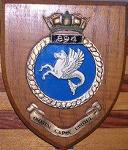
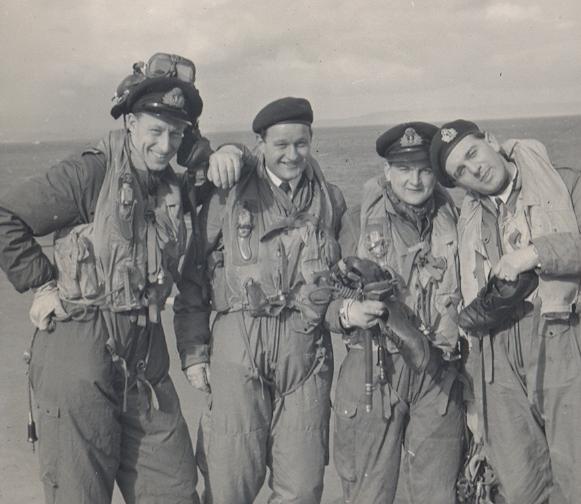
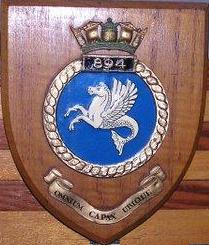
894 Squadron, 1957-58
1957
- No 1 All Weather Fighter Course in 766
squadron, RNAS Merryfield flying De
Havilland Sea Venom 21s. After finishing
course went to Lossiemouth for Air Weapons
Training with 764 squadron. Served in No
891 [short time] and as Senior Pilot of
894 Sea Venom squadron (above), in
HMS Eagle.
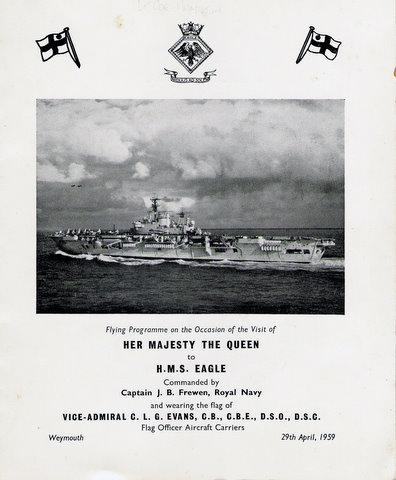
HM
the Queen's Visit to HMS Eagle, 29 April
1959
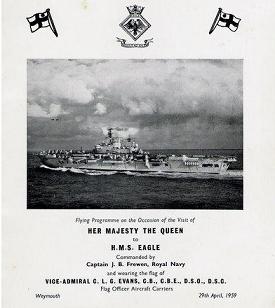
|
| |
| |
 |
|
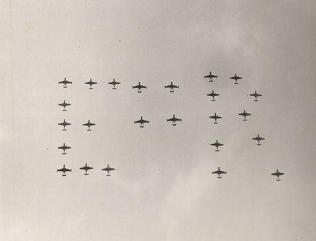
E II R flypast
|
|
|
| |
| |
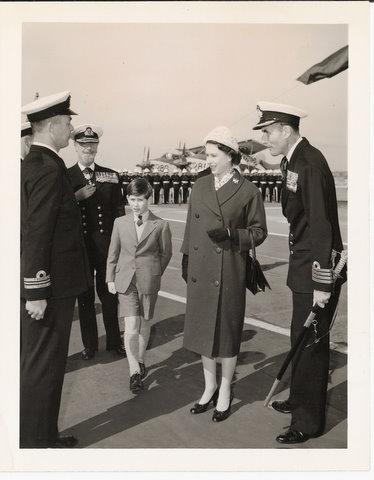
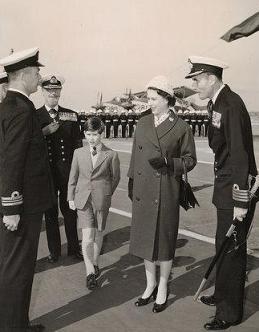
This
was a private visit by HM so there was
no press or any publicity. I was one of
the lucky ones presented to HM in the
wardroom [I had served with the Duke in
HMS Whelp in 1944] Prince Charles was
looked after in the anteroom while this
was going on. He was asked if he would
like a drink and he said "yes please, a
gin and tonic"!!!!! (above
left - HM and Prince Charles with
Monty Mellor, Charles Evans, Captain
Frewin)
The
formation fly past photograph was taken a
little past the overhead position so the
"two" part looks a bit off centre, but it
wasn't.
Our
CO, "Blackie" led the formation at the
head of the E and I formated on him from
the head of the R using a Venom with an
extra good AI Mk21 and a tip top Observer
who monitored the distance between us.
1959
- Joined 700Y De Havilland Sea Vixen Mk 1
trials squadron and then, as Commanding
Officer 892 squadron took the first Sea
Vixens to sea in HMS Ark Royal and, later
HMS Victorious. Carried out day launch and
deck landing while the carrier was taking
on stores from a replenishment ship [RFA
Fort Duquesne]. Also a night launch and
deck landing while the carrier was
fuelling from an RFA oil tanker. These two
sorties could be "firsts" in the RN.
|
| |
| |
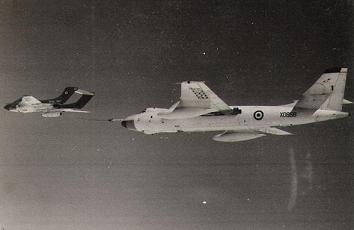
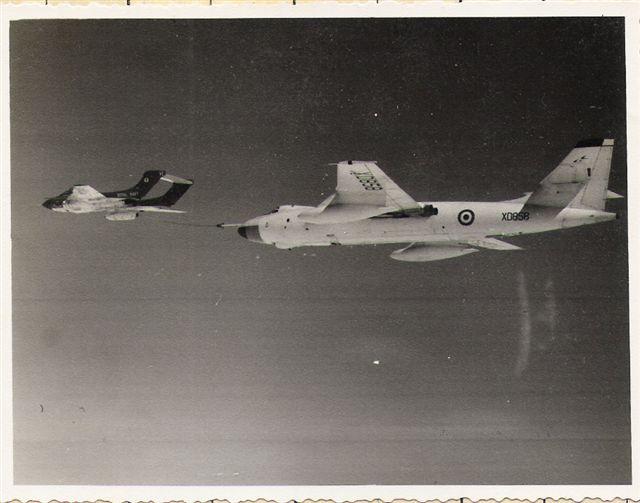
De Haviland Sea Vixen fighter and
Valiant bomber "pluggin-in" |
|
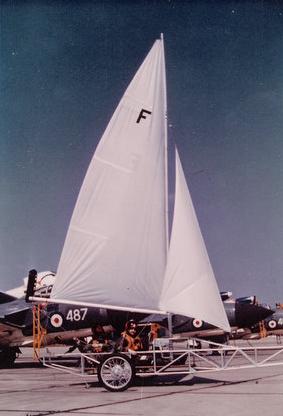
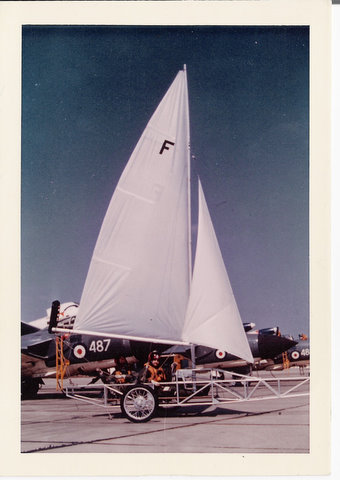
My new toy - a land yacht, and fully
dressed for her!!!! Sea
Vixens
behind, c 1960
|
|
|
| |
1961-62
- Graduated from No 32 Royal Naval Staff
Course, at RN College Greenwich.
1962
- Commanding Officer 899 Sea Vixen
Headquarters and Trials Squadron.
Conducted many trials including Flight
Refuelling using the probe and drogue
method. Obtained 20 and 30 degree bomb
dropping clearances. Conducted early
Firestreak air-to-air missile trials.
Carried out arrestor wire pulling on
various carriers. Demonstrated solo
aerobatics at air shows around southern
England.
During
flying career carried out 557 day deck
landings and 117 at night.
1964
- After promotion to Commander served as
Aviation specialist at the Royal Naval
Tactical School for two years. Students
from all NATO navies were trained in the
battle simulator and lectures given to
senior officers and civilians of
equivalent rank. Included lectures to the
Mediterranean Fleet at Gibraltar on "The
Threat" and some days in USS Independence,
CVA 62, fleet carrier during RN/USN
exercises off Norway. That is another
story!
ROYAL
AUSTRALIAN NAVY
1966
- Exchange service with Royal Australian
Navy as Executive Officer of the RAN
Apprentice Training Establishment, HMAS
Nirimba, Sydney. New South Wales.
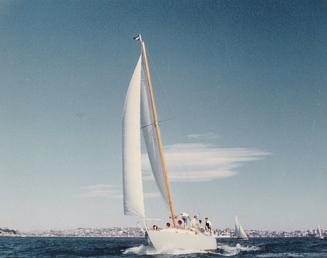
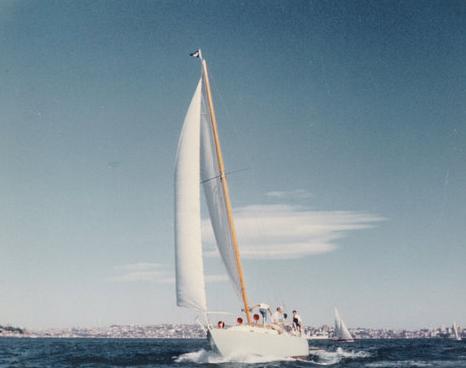
Yacht Nirimba
built by apprentices at HMAS
Nirimba, sailing in the Harbour, c
1966, steel hull, design by Alan
Payne
1968
- Returned to the UK and resigned from the
Royal Navy in 1969 in order to emigrate to
Australia.
AUSTRALIA
A
LOVE OF "BOATS" - following on from
Dartmouth days
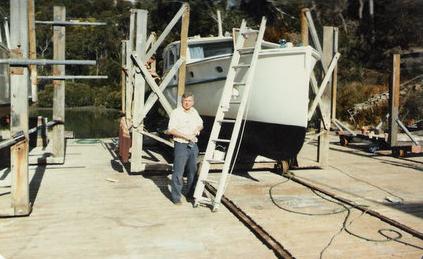
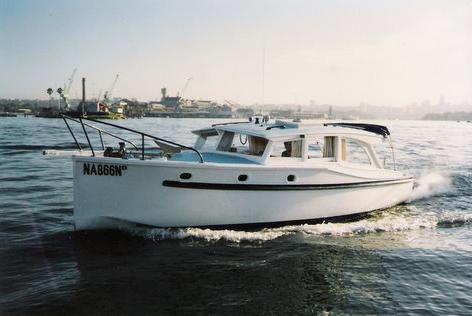
Motor
Boat Vagabond II (below), built
1939 in the Hawkesbury River, north of
Sydney
|
| |
|
|
| |
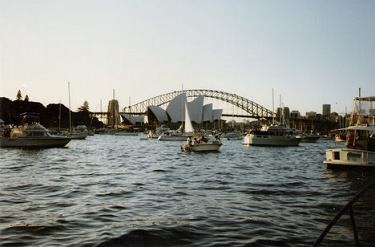
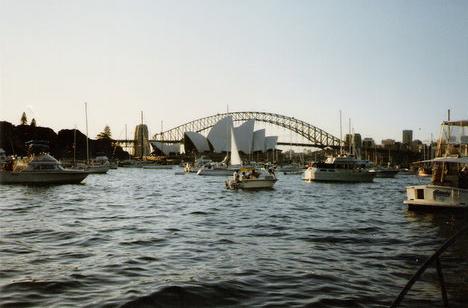
Sydney Opera House and Harbour Bridge
|
|
|