Approaches to Japan, British
Pacific Fleet Operations (see
May 1945)
...1945
MAY
1945
ATLANTIC
- MAY 1945
Russian
Convoys - One last
convoy sailed each way soon after
the German surrender. JW67
left the Clyde on the 12th with 23
merchantmen and reached Kola on
the 20th. Three days later return
RA67, again with 23 ships,
set out and on the last day of the
month sailed up the Clyde. Since
August 1941, 78 convoys had
sailed in both directions and
passed through nearly 1,400
merchant ships for the loss of 85
- a loss rate of 6 percent.
Millions of tons of vital cargo
and thousands of tanks and
aircraft had been delivered to the
Russians. The cost to the Royal
Navy included one escort carrier
severely damaged, two cruisers,
six destroyers, eight other
escorts sunk in the cold and often
stormy waters of the Arctic. The
Germans lost "Scharnhorst" and
indirectly "Tirpitz", three big
destroyers, over 30 U-boats.
Battle
of the Atlantic, Conclusion
- Just 68
months before, northwest of
the British Isles liner "Athenia"
was torpedoed by "U-30" and 11
days later "U-39" sunk by Royal
Navy destroyers. Since then, tens
of thousands of lives, thousands
of ships and hundreds of U-boats
had been lost in the battle to
sustain Britain as the base
without which the liberation of
Europe would have been impossible.
As the United States took over
from Britain the mantle of the
world's most powerful navy, so the
last merchantmen and U-boats of
the Battle of the Atlantic went to
the bottom in American waters and
involved American ships. 6th -
"U-881"
was
sunk
by the US Navy south of
Newfoundland. On the same day,
"U-853" torpedoed freighter "Black
Point" off New York, was hunted
down and sunk by US destroyer
escort "Atherton" and frigate
"Moberley". The cost of the Battle
is usually measured in terms of
the 2,400 merchantmen sunk in the
North and South Atlantic. To this
must be added one battlecruiser,
three fleet and escort carriers,
two cruisers, 47 destroyers and
escorts of the British and
Canadian Navies lost in the
Atlantic, excluding the convoy
routes to Russia. Plus the
warships lost by the US and other
Allied Navies.
Monthly
Loss Summary: 1 merchant ship of
5,000 tons in the Atlantic: 2
German U-boats
EUROPE
- MAY 1945
End
of the U-boats - Right
to the end of the war there was no
let-up in the struggle against the
U-boats, especially faced with the
threat from the new and dangerous
Type XXI and XXIII. Between the
2nd and 6th, 23 U-boats of all
types were destroyed by the
Typhoons, Beaufighters, Mosquitoes
and Liberators of the RAF and
Allied Tactical Air Forces. As the
German fighter defences crumbled,
the Allied aircraft roamed the
Kattegat and nearby waters
catching many of the U-boats in
the Baltic or sailing for Norway.
One more was lost by unknown
causes off Scotland. Two others
respectively represent the last
U-boat destroyed by the Royal Navy
and the final sinking of the
European war. While much of this
was happening, steps were taken to
arrange for the surrender of
Germany's still formidable
submarine fleet. 4th - A
Royal Navy task force consisting
of escort carriers
Queen,
Searcher
and
Trumpeter
with cruisers and destroyers and
under the command of Vice-Adm R.
R. McGrigor returning from
Murmansk, launched strikes against
shipping off Norway, and "U-711"
was
sunk near Narvik. The same day Adm
Doenitz ordered his U-boats to
stop operations and return to
base. Many crews prefered to
scuttle their boats. 7th -
U-boats gained their last success
when Type XXIII coastal boat
"U-2336" sank merchantmen
"Avondale Park" and "Sneland" off
the Firth of Forth. Further north,
to the west of Bergen, a RAF
Catalina of No 210 Squadron on
Northern Transit Area patrol
destroyed "U-320", the very last
U-boat casualty. 8th -
Operational U-boats were ordered
to surface and sail for Allied
ports flying a black flag of
surrender. Most made for the UK,
although a few reached the US. 9th
- The first of over 150
surrendered boats started to
arrive, but more than 200 were
scuttled. Of those surrendering, a
quarter were taken over by the
Allied powers and the rest sunk by
the Royal Navy in the Atlantic off
Northern Ireland in Operation
'Deadlight' through to January
1946.
Germany,
Final Defeat and Surrender -
Western
Front - In the last week of
the war in Europe, US First and
Ninth Armies stood along the west
bank of the River Elbe. To their
north, British Second Army reached
the Baltic on the 2nd and next day
took Hamburg. In the south, US
Third Army pushed into
Czechoslovakia as far as Pilsen
and Austria around Linz, and
Seventh Army into Austria and
through Innsbruck before crossing
the Brenner Pass into Italy. There
the Western Allies stopped. On the
4th outside Hamburg, German envoys
surrendered their forces in
Holland, Denmark and northwest
Germany to Field Marshal
Montgomery.
Eastern
Front - Berlin fell to the
Russian Army on the 2nd. Fighting
continued in Czechoslovakia and
Austria and, on the 5th,
resistance forces rose to take
over Prague. A few days later the
last major German units
surrendered to the Russians to the
east of the Czech capital.
Surrender
and Occupation - At Gen
Eisenhower's HQ at Rheims in
France on the 7th, the
unconditional surrender of Germany
was signed to take effect from
midnight on the 8th - VE day. On
the 9th it was ratified in Berlin
and signed for the Allies by ACM
Tedder (as Gen Eisenhower's
Deputy) and Russian Marshal
Zhukov. As the last remaining
German forces surrendered in
France, Germany, Norway and
elsewhere, and the Allies
completed the liberation of all
Europe from their hold, the four
major powers moved into their
zones of occupation in Germany and
Austria. The war in Europe was
over.
Monthly
Loss Summary: 2 merchant ships of
5,000 tons in UK waters.
MEDITERRANEAN
- MAY 1945
Italy,
Conclusion - As agreed, the
cease-fire took place on the 2nd
just as the Allies reached Trieste
near the Yugoslavian border. On
the 6th they arrived at the
Brenner Pass into Austria in time
to meet units of the US Seventh
Army coming from the north through
Germany.
Mediterranean,
Final Victory -
The entire Mediterranean basin,
the Middle East, and North and
East Africa were now completely
free from threat of German and
Italian military domination. In
five short years the RN had moved
from having to fight hard to
maintain a presence in the
Mediterranean, to where it had
been largely responsible for
landing large Allied armies on
enemy shores and supplying and
supporting them. The cost had been
high - over 40 percent of total
major warship losses of the Royal
Navy world-wide: one battleship,
two fleet carriers, 20 cruisers
and cruiser-minelayers, 67
destroyers and escort destroyers,
45 submarines, escorts,
minesweepers, landing craft,
coastal forces, and thousands of
officers and men.
INDIAN
& PACIFIC OCEANS - MAY 1945
Burma,
Conclusion - Concerned that
14th Army coming from the north
would not reach Rangoon - the
capital and major port of Burma,
before the monsoon broke, the
go-ahead was given for airborne
and amphibious landings. On the
1st, Gurkha paratroops landed near
the coast. Early next morning the
main landings took place. 2nd,
Landings near Rangoon, Operation
'Dracula' - Under the naval
command of Rear-Adm B. C. S.
Martin, an Indian division was
carried from Ramree Island in
landing ships and craft and put
ashore at Rangoon, covered by
escort carriers, cruisers and
destroyers (Cdre G. N. Oliver). At
the same time, diversionary
attacks were made on the Andaman
and Nicobar Islands by Vice-Adm H.
T. C. Walker with battleships
Queen
Elizabeth
and the French "Richelieu" and
aircraft from two escort carriers.
Rangoon was entered on the 3rd by
the Indian landing force to find
the Japanese gone. On the 6th they
met up with 14th Army units just a
few miles to the north. The rest
of the war was spent mopping up
those Japanese unable to escape to
Thailand.
16th,
Sinking of the "Haguro", Last
Major Surface Warship Action of
the War - Japanese heavy
cruiser "Haguro" sailed for the
Andaman Islands to evacuate the
garrison. She was reported by East
lndies Fleet submarines in the
Malacca Strait and Adm Walker set
out with his escort carriers to
catch her. They were are sighted
on the 11th and "Haguro" turned
back. She tried again a few days
later. This time 26th Destroyer
Flotilla (Capt M. L. Power) with
"Saumarez", "Venus", "Verulam",
"Vigilant" and "Virago" was
waiting off Penang. In a classic
night torpedo action they attacked
from all sides and sent "HAGURO"
to the bottom early on the 16th.
19th
- On patrol in the Java Sea,
submarine
"TERRAPIN"
attacked an escorted Japanese
tanker and was badly damaged by
depth charges in the
counter-attack. She was not
repaired, the last Royal Navy
submarine casualty of the war.
Borneo
- Australian forces under Gen
MacArthur started landing
operations in Borneo, partly to
recover the oil fields. On the 1st
they went ashore at
Tarakan on the east
coast of Dutch Borneo, covered by
ships of Seventh Fleet including
the Australian cruiser "Hobart".
Similar assaults took place at Brunei
Bay on the north coast
of British Borneo on 10th June,
after which the Australians
advanced south down the coast of
Sarawak. In the last
major amphibious operation of
the war on the 1st July, the
Australians landed at Balikpapan,
south of Tarakan on the east
coast. Tough fighting was needed
to secure the port.
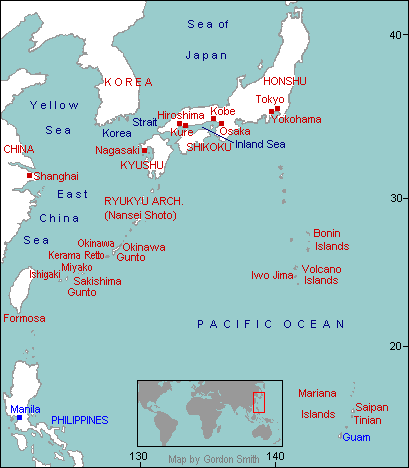
Okinawa,
Ryukyu Islands
(see
map above)
- As the struggle for Okinawa
continued, US Fifth Fleet was hit
by four 'kikusui' attacks in May.
By the 4th, BPF was back off the
Sakishimas and also under fire: 4th
-
Formidable
and
Indomitable
were
hit by one aircraft each. 9th
-
Victorious
was
damaged
and "Formidable" hit again by a
suicide aircraft. In all cases the
carriers' armoured deck allowed
them to resume flight operations
in a remarkably fast time. On the
25th the RN ships headed first for
Manus to prepare for the next
stage of the attack on Japan. In
two months the aircraft of BPF had
flown over 5,000 sorties. (HMS
Indomitable in the Far East
1944-45, a Photographic Record)
DEFENCE
OF TRADE - June 1944 to May
1945
Total
Losses = 210 British, Allied
and neutral ships of 942,000
tons ( 78,000 tons per month)
By
Location
|
Location
|
Number
of British, Allied,
neutral ships
|
Total
Gross Registered
Tonnage
|
|
North
Atlantic
|
31
|
177,000
tons
|
|
South
Atlantic
|
5
|
28,000
tons
|
|
UK
waters
|
135
|
500,000
tons
|
|
Mediterranean
|
5
|
7,000
tons
|
|
Indian
Ocean
|
21
|
134,000
tons
|
|
Pacific
Ocean
|
13
|
96,000
tons
|
By
Cause
|
Causes
in order of tonnage
sunk
(1. 4. ... - Order
when weapon first
introduced)
|
Number
of British, Allied,
neutral ships
|
Total
Gross Registered
Tonnage
|
|
1.
Submarines
|
120
|
629,000
tons
|
|
2.
Mines
|
50
|
162,000
tons
|
|
4.
Aircraft
|
14
|
96,000
tons
|
|
5.
Other causes
|
15
|
28,000
tons
|
|
7.
Coastal forces
|
11
|
27,000
tons
|
|
3.
Warships
|
-
|
-
|
|
6.
Raiders
|
-
|
-
|
JUNE
1945
INDIAN
& PACIFIC OCEANS - JUNE 1945
8th
- As Japanese heavy cruiser
"ASHIGARA" (sister-ship to
"Haguro") carried troops from
Batavia to Singapore, she was
torpedoed five times by submarine
"Trenchant" and sank in the Banka
Strait off southeast Sumatra.
British
Pacific Fleet - The main
body of the Fleet prepared to
leave Sydney to join the US fleet,
now the Third under Adm Halsey. As
they did, newly arrived fleet
carrier
Implacable
with an escort carrier and
cruisers in support, launched
raids on the by-passed island of
Truk in the Carolines on the 14th
and 15th.
Okinawa,
Ryukyu
Islands - The fighting
finally came to an end on the 22nd
after one of the bitterest of
campaigns. More than 7,000 men of
the US Army and Marine Corps had
been killed - and nearly 5,000 men
of the US Navy, mainly from
kamikaze attacks. The Japanese had
lost well over 100,000 killed. USN
losses in ships include five
carriers badly damaged and 32
destroyer types, many on radar
picket duty, sunk or never
repaired. Over 7,000 Japanese
aircraft were lost from all
causes.
JULY
1945
ATLANTIC
- JULY 1945
Atomic
Bomb - The world's first
A-bomb was successfully exploded
at Alamogordo, New Mexico on the
16th July in Operation 'Trinity'.
EUROPE
- JULY 1945
Potsdam
Conference - In the second
half of the month, the heads of
the three great powers met at
Potsdam outside Berlin to continue
discussing the future of Europe
and final defeat of Japan. By the
end of the conference only Stalin
remained of the original three
major Allied leaders who had met
in the past. Accompanied by
President Truman of the United
States for the first time, Winston
Churchill was only there at the
start. On the 26th the Potsdam
Declaration was broadcast,
demanding the unconditional
surrender of Japan.
Britain
- Winston Churchill's Conservative
Party was swept from power and the
Labour Party under Clement Attlee
took over the reins of the wartime
Coalition Government. The new
Prime Minister travelled to
Potsdam for the rest of the
conference.
INDIAN
& PACIFIC OCEANS - JULY 1945
Australia
- Prime Minister John Curtin
failed to see the end of the war
dying on the 5th after an illness.
Acting PM, Joseph Chiffley,
succeeded him.
 24th/26th,
Last Major Warship Casualties of
the RN in the War - In East
lndies Fleet operations against
the Phuket Island area off the
west coast of southern Thailand,
including mine clearance, fleet
minesweeper
SQUIRREL
was
mined and sunk on the 24th.
Two days later on the 26th,
kamikaze aircraft attacked for the
first and last time in the Indian
Ocean theatre. Fleet minesweeper
"VESTAL"
was
hit
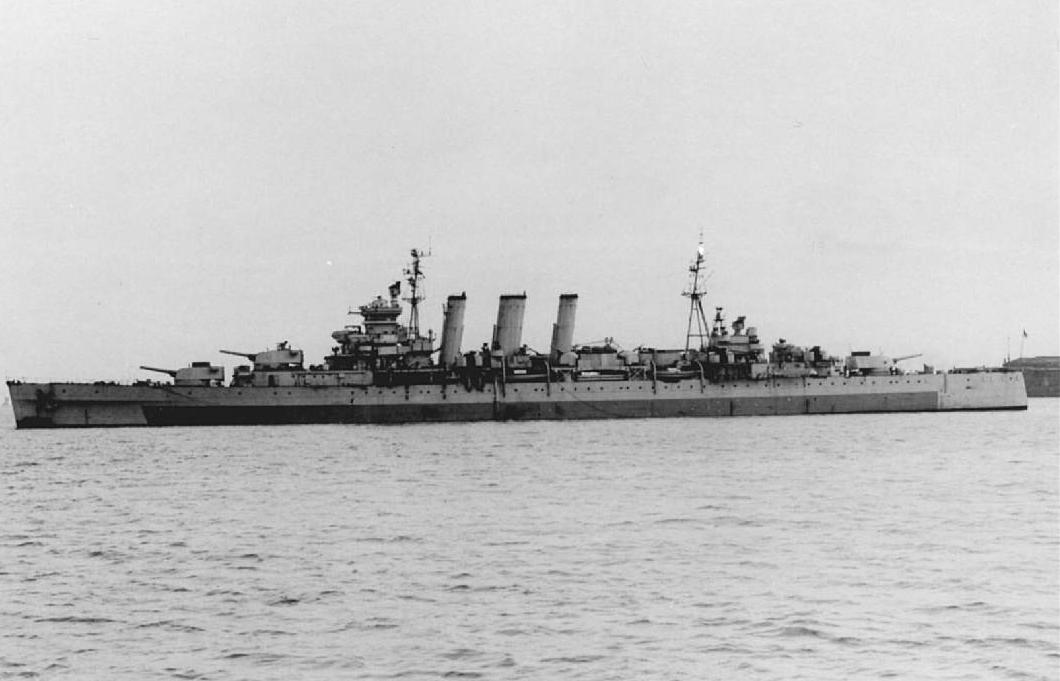
and scuttled. Heavy cruiser
Sussex
(right - NavyPhotos)
was
very
slightly damaged by a near miss.
24th/26th,
Last Major Warship Casualties of
the RN in the War - In East
lndies Fleet operations against
the Phuket Island area off the
west coast of southern Thailand,
including mine clearance, fleet
minesweeper
SQUIRREL
was
mined and sunk on the 24th.
Two days later on the 26th,
kamikaze aircraft attacked for the
first and last time in the Indian
Ocean theatre. Fleet minesweeper
"VESTAL"
was
hit
and scuttled. Heavy cruiser
Sussex
(right - NavyPhotos)
was
very
slightly damaged by a near miss.
29th
- Late on the 29th after
delivering atomic bomb components
to Tinian, US cruiser
"lNDIANAPOLIS"
was
sunk by a Japanese submarine in
the Philippines Sea.
31st,
Sinking of the "Takao" -
Japanese heavy cruiser "Takao",
previously damaged by US
submarines on passage to the
Battle of Leyte Gulf, was now
laying off Singapore in the Johore
Straits. On the night of the
30th/31st,
midget
submarines "XE-1" (Lt Smart)
and "XE-3" (Lt Fraser) were
released by towing submarines
"Spark" and "Stygian" and managed
to reach the cruiser to drop their
charges. "XE-3" was almost trapped
beneath the hull of "Takao" on a
falling tide. "TAKAO"
was
badly damaged in the resulting
explosions and sank to the bottom.
Lt Ian Fraser RNR and his diver,
Leading Seaman James Magennis were
awarded the Victoria
Cross. Other XE craft cut or
damaged the undersea telephone
cables off Saigon and Hong Kong at
this time.
British
Pacific Fleet - Adm
Rawlings, now with King
George V,
Formidable,
Implacable,
Victorious
and six cruisers including the
Canadian
Uganda
and New Zealand
Achilles
and
Gambia
joined Third Fleet in mid-month to
bombard Japan by sea and air
through into August.
Japan
- During the attacks on Japan the
US Navy reserved the right to
finish off the Imperial Japanese
Navy and in aircraft strikes on
Kure destroyed battleship
"HARUNA", battleship/carriers
"ISE" and "HYUGA", carrier "AMAGI"
and several carriers under
construction.
AUGUST
1945
INDIAN
& PACIFIC OCEANS - AUGUST
1945
Japan
- As US Third Fleet and the
British Pacific Fleet continued to
bombard Japan, the British and
Commonwealth Navies won their last
Victoria Cross of World War 2. Lt
Robert Gray RCNVR, Corsair
fighter-bomber pilot with
Formidable's
1841 Squadron pressed home an
attack on shipping in Onagawa
harbour, north-eastern Honshu on
the 9th. Under heavy fire, he sank
his target before crashing in
flames and was posthumously
awarded the
Victoria
Cross.
Japan
- Final Defeat .....
Although
Japan's cities and production
facilities were being destroyed by
the strategic bombing offensive
and now by Third Fleet warships
laying off her shores, the
Imperial Navy and merchant marine
annihilated, and remaining
overseas conquests isolated and
under attack, the country was not
beaten. There was therefore no
let-up in the planning and
execution of the campaigns needed
to bring the war to a final
conclusion. In South East Asia,
Adm Mountbatten prepared to land
in Malaya and the Americans
planned to invade the southern
Japanese island of Kyushu in the
Autumn and Honshu around Tokyo
early in 1946. US casualties of a
million or more were expected,
plus how many million Japanese? In
a matter of days, all the planning
came to nought: 6th - B-29
Superfortress "Enola Gay", flying
from Tinian dropped the
first
atomic bomb
on Hiroshima. The equivalent of
20,000 tons of TNT killed 80,000
people. 8th - Russia
declared war on Japan and invaded
Manchuria early next day
overwhelming the Japanese
defenders. 9th - The second
A-bomb was
detonated over Nagasaki
and over 40,000 people died. 15th,
VJ-Day -
After days of internal
argument, Emperor Hirohito
over-rode the politicians and
military and broadcast Japan's
unconditional surrender over the
radio. 27th - Ships of
Third Fleet under Adm Halsey
started to arrive in Tokyo Bay and
anchor within sight of Mount Fuji.
Representative ships of the
British Pacific Fleet and Dominion
Navies included
Duke
of York (flying the flag of
Adm Fraser),
King George V,
Indefatigable,
cruisers
Newfoundland
and New Zealand
Gambia
and two Australian destroyers.
Australian cruisers
Shropshire
and
Hobart
later joined them. 29th -
Adm Nimitz, C-in-C Pacific flew to
Japan, followed by Gen MacArthur,
C-in-C South West Pacific and
future Allied overlord of Japan.
TOTAL
MERCHANT SHIP LOSSES
SEPTEMBER
1939
to
AUGUST
1945
Summarised
here in all its immensity are the
losses in ships suffered by
Britain, its Allies and neutral
countries throughout the war. Of
the grand totals that follow,
Britain's losses amounted to
around 50% of tonnage, with a
similar percentage applying to
sinkings in the North and South
Atlantic. Both figures point to
the critical importance of the
Battle of the Atlantic and the
price Britain paid for keeping
open the sea-lanes. In
concentrating on losses, it should
not be overlooked that taking the
war as a whole, well over 99
percent of merchantmen reached
their destination safely. On the
other side of the balance sheet,
more than 30,000 officers and men
of the British Merchant Navy did
not come home plus the many men of
Allied and Neutral nations. Axis
losses were also considerable.
Total
Losses = 5,150 British, Allied
and neutral ships of
21,570,000 tons (300,000 tons
per month)
By
Location
|
Location
|
Number
of British, Allied,
neutral ships
|
Total
Gross Registered
Tonnage
|
|
North
Atlantic
|
2,232
|
11,900,000
tons
|
|
South
Atlantic
|
174
|
1,024,000
tons
|
|
UK
waters
|
1,431
|
3,768,000
tons
|
|
Mediterranean
|
413
|
1,740,000
tons
|
|
Indian
Ocean
|
385
|
1,790,000
tons
|
|
Pacific
Ocean
|
515
|
1,348,000
tons
|
By
Cause
|
Causes
in order of tonnage
sunk
(1. 4. ... - Order
when weapon first
introduced)
|
Number
of British, Allied,
neutral ships
|
Total
Gross Registered
Tonnage
|
|
1.
Submarines
|
2,828
|
14,686,000
tons
|
|
4.
Aircraft
|
820
|
2,890,000
tons
|
|
2.
Mines
|
534
|
1,406,000
tons
|
|
5.
Other causes
|
632
|
1,030,000
tons
|
|
6.
Raiders
|
133
|
830,000
tons
|
|
3.
Warships
|
104
|
498,000
tons
|
|
7.
Coastal forces
|
99
|
230,000
tons
|
SEPTEMBER 1945
INDIAN
& PACIFIC OCEANS - SEPTEMBER
1945
...
and Surrender
2nd
- Gen MacArthur accepted
Japan's surrender on behalf of the
Allied powers on the quarterdeck
of US
battleship "Missouri".
Amongst
the signatories of the surrender
document were Adm Sir Bruce Fraser
for Great Britain, Gen Blamey for
Australia, Col Moore-Cosgrove for
Canada, Air Vice Marshal lsitt for
New Zealand and, for the United
States, Adm Nimitz.
Royal
Navy - As ships of the Royal
and Dominion Navies repatriated
Allied prisoners of war and
transported food and supplies
throughout South East Asia, other
surrenders followed during the
next few days: 6th - On
board
light
carrier
Glory
off the by-passed Japanese
stronghold of Rabaul, Australian
Gen Sturdee took the surrender of
the Bismarck Archipelago,
New Guinea and the Solomon
Islands.
Local surrenders in the area took
place on Australian warships.
12th - South East Asia was
surrendered to Adm Mountbatten
at a ceremony in Singapore. 16th
- Arriving at
Hong Kong in cruiser
Swiftsure,
Rear-Adm C. H. J. Harcourt
accepted the Japanese surrender.